Home › Services › Roof Replacement
About 64% of Plano's housing units were built between 1970 and 1999. A roof put on when a 1993 house was new is past 30 years old, so on many streets here a replacement is likely the second roof, sometimes the third, and it comes with a city permit and an inspection that reaches into the attic.
A permit is required when the work exceeds 25% of the roof area.
Existing wood shake, slate, clay, cement or asbestos-cement tile has to come off first.
Deteriorated decking or framing is replaced as necessary, and unpackaged shingles (seconds) are not allowed.
The final inspection includes the attic: vent piping, rafters, and heating and air vents put back the way they were.
Source: City of Plano Building Inspections, “Re-Roof Residential Permit Requirements,” form revised September 16, 2016. Confirm current requirements with the city before work starts.
Those four lines are from a two-page city handout, and they shape the job more than any brochure does. The fuller version, with the registration rule for roofing companies, is on the Plano re-roof permit page.
Which it is, how many layers are there now, and what happens to the debris. If anything other than asphalt shingle is under the top layer, the city's removal rule applies.
A per-sheet or per-foot price for replacing soft decking, agreed before the old roof comes off, so a discovery at 10 a.m. is not a negotiation at 10:15.
Plumbing vents, furnace and water-heater flues, bath fans, skylights. The attic final looks at exactly these, so the scope should say what is done at each.
Intake at the eaves and exhaust near the ridge, counted and written down. A new roof over a starved attic ages faster than it should.
Manufacturer, product line, wind rating, and the workmanship term stated separately from the manufacturer's.
The name on the application and the permit number. Ask for both before the first bundle is delivered.
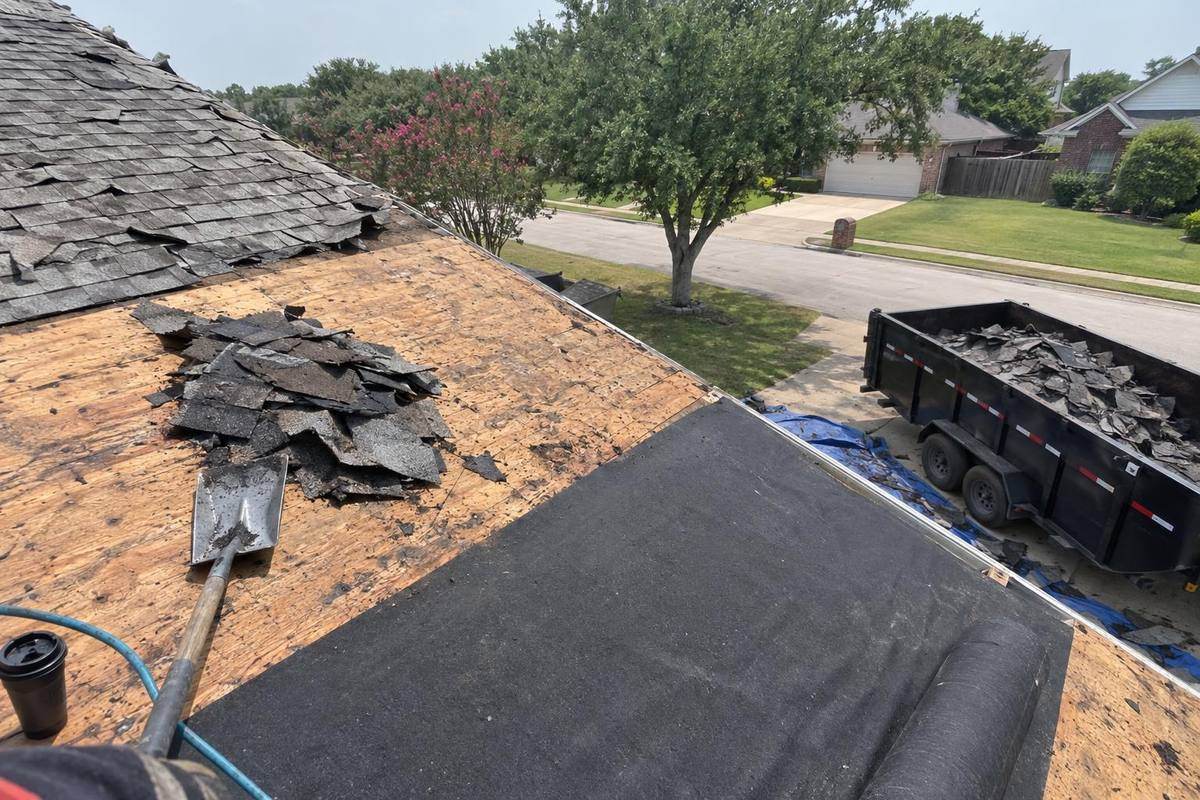
A first roof goes onto new, dry decking with every vent pipe freshly set. A second roof goes onto wood that has been through three decades of North Texas summers, on a house where a water heater has probably been replaced, a bath fan added, a satellite dish mounted and removed. Each of those leaves a mark the tear-off exposes.
That is the practical reason to treat the first hour after the old shingles come off as part of the job, not a surprise. Ask the contractor to photograph the bare deck and anything soft before it is covered. Those photos are also the simplest record to have on hand if the house is sold.
If the calendar is not forcing the decision, an inspection first is the cheaper step. It tells you whether the roof has years left with a repair, or whether patching is spending money on a roof that is done.
On a contracted job the roofing company normally files the application, and the city's handout assumes the person doing the work is the one applying. A homeowner working on their own homestead can apply without registering as a contractor. Either way, ask for the permit number.
Because the handout says the final inspection includes it. The inspector is checking that vent piping, rafters and heating and air vents were left right after the roof work. Make sure the attic hatch can be reached on inspection day.
Often, yes. Where a roof meets a sided wall or a dormer, the flashing serves both, and doing them together avoids opening that joint twice. See siding replacement.
Say what year the house was built and whether the roof has been replaced before. An independent contractor who works Plano takes it from there.
Call (972) 526-0131 Send the Details Plano Roofing